
The Dark Rum Conundrum
How to think about "dark Jamaican rum."
Links About Drinks
Instead of our usual links section, I just want to highlight all these incredible tales of Scottish soccer fans drinking Boston dry.
It takes a lot to out-drink Boston!


Rum for Cover
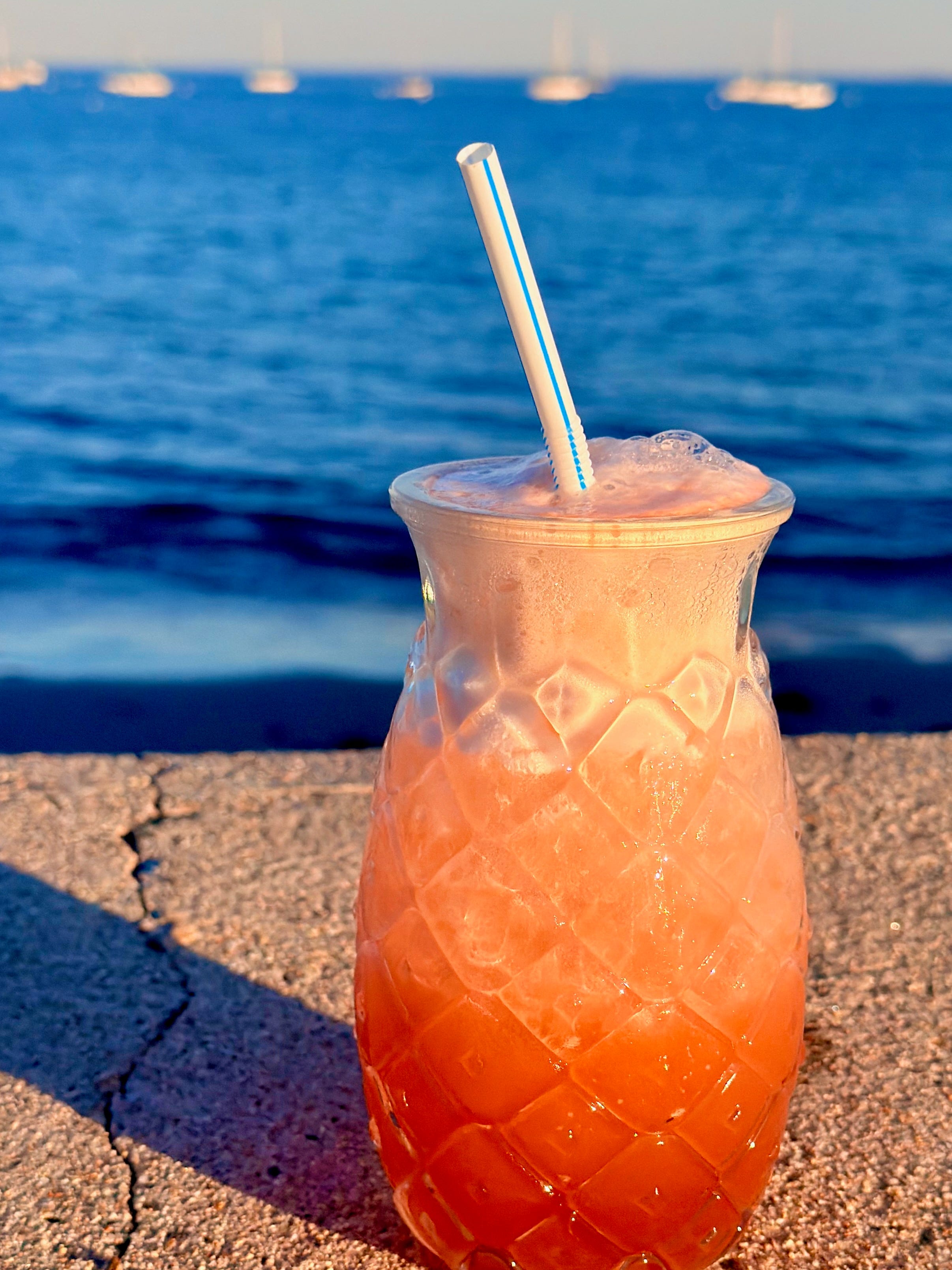
This week’s cocktail has even more pineapple—so you can feel extra rich. Juice the fruit. Discard the rest. Bask in one of modernity’s great not-quite-natural luxuries.
It’s a shame there aren’t more pithy quotes about pineapples. But I suppose pineapples don’t exactly lend themselves to brevity. Pineapple juice, and the cocktails that employ the stuff, are drawn out pleasures, for long, endlessly sunny summer days when you have time on your hands.
So it’s fitting, then, that this week’s cocktail is literally a long drink. A long drink is a cocktail extended by soda, beer, Champagne, tonic, and so forth. Long drinks can be simple, like a rum and Coke or a Scotch and soda. They can be somewhat more complex, like a French 75.
With nine ingredients—yes, one for every planet, because tiki doesn’t recognize the IAU’s reclassification of Pluto either—this week’s cocktail errs on the side of complexity. It decidedly does not follow the five ingredient rule, but as I noted last summer, tiki is a lawless zone that is often exempt from such mandates.
Tiki is anarchic, exuberant, lawless, and, like the pineapple itself, a symbol of modern abundance. In contemporary parlance, tiki is so very, very…extra.
Part of what makes it so extra is its use of rum, or rather rums, plural. It’s reasonably common for tiki drinks to call for two, three, occasionally even four different rums. And even when just a single rum is called for, as in last week’s cocktail, it often pays to use multiple bottles. Tiki godfather Donn Beach described his drinks as “rum rhapsodies.” As the tiki diehards sometimes say, what one rum can do, two rums can do better.
This week I want to talk about an element one often sees in tiki drinks: dark Jamaican rum. Dark Jamaican rum was the foundation of last week’s drink. And although it’s not the only rum specified, it’s the most prominent boozy element in this week’s drink too.
When you see a recipe call for dark Jamaican rum, what should you do? There are some obvious choices, and some less obvious options too—including, if you’re feeling contrarian, rums that aren’t even from Jamaica at all.
Tiki follows no laws. Perhaps neither should you.
So this week, we will…
Discuss a lengthy list of Jamaican dark rum options, including some that aren’t technically “dark rum,” or even from Jamaica.
Talk briefly about the virtues of blending different rums together in the same drink, even when the recipe doesn’t call for it.
And then look at a nine ingredient tiki smorgasbord that calls for three rums, and might be better with four.
It’s total rum anarchy! And it’s delicious.
Rum Conundrums
Something to understand about “dark rum” as a general category is that “dark” doesn’t really mean anything. Dark rum isn’t a legal category, so government-approved labels declaring a rum to be “dark” or “black” don’t reveal anything particular.
Tiki’s use of dark rum was at least partially a reaction to the lighter, brighter, often clear rums of the day, the kind you might now find in a by-the-book Daiquiri. Tiki drinks were designed to show off a wider array of rums and rum styles, and how they could work together.
So “dark” doesn’t necessarily point to any consistent feature except color.
Dark rums are sometimes aged, sometimes not, sometimes artificially colored or otherwise look-enhanced, and sometimes not. They are made using various processes, including pot and column stills.
And while Jamaican rum specifies something clear and consistent—it comes from Jamaica!—rum production methods, as well as how they are described, have changed considerably over the decades since tiki was born, sometimes without clear acknowledgment from the producer.
This is a point that rum expert Matt Pietrek has been making for years, especially with regards to the Mai Tai, a drink that is now often made with a blend of Jamaican rum and rhum agricole in a nod to some of the later formulations of the drink, but which might be more historically, or at least spiritually, accurate with an all-Jamaican rum blend. So using historical reference points for rum calls may not provide you with the rum that currently tastes like the old bottle.
And besides, tiki recipes shifted even during their heyday. Later this summer we are going to spend several weeks looking at Zombies—yes, Zombies, plural—because there are so many different recipes that bill themselves as Zombies. In fact, just this week I had a Zombie at Washington, DC’s Service Bar. It was recognizably a Zombie, with distinct rum, lime, and cinnamon notes, but it veered slightly from classic recipes and also used a single rum, Appleton 12.
The Dark Rum of the Soul
Appleton 12 is, by most definitions, a Jamaican dark rum. One of many.
So let’s talk about some others—and some that don’t count, but that you might use anyway.
The main thing I want to stress is that there are a lot of ways to go with a specification like this. There is room for creativity if you have a large home bar. But for those with more limited selections, you shouldn’t be afraid to try something even if you don’t have a bottle that’s technically correct.
The most basic, most obvious options are the ones I recommended last week:
